

Florida Hurricane Vehicle Preparation Checklist for Tires, Brakes, and Fluids
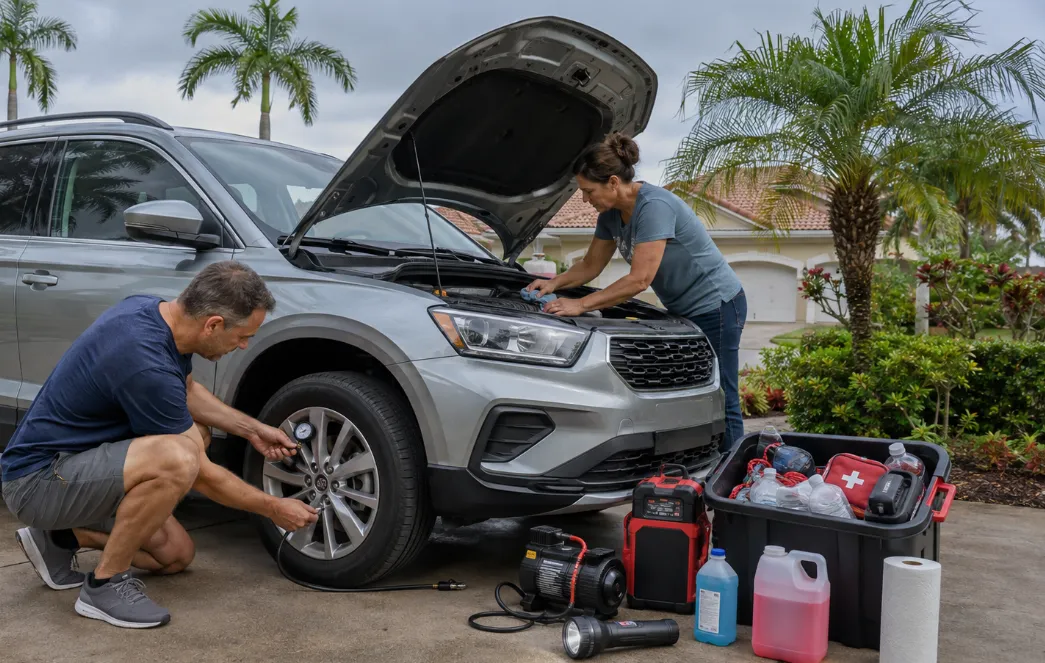
Hurricane preparation usually begins at home. People install shutters, gather drinking water, and charge their phones. The vehicle sitting in the driveway can be easy to forget.
A dependable car may become essential if an evacuation order is issued. It may also be needed after the storm, when roads are wet, fuel is limited, and repair shops are closed. Checking tires, brakes, and fluids before severe weather arrives can prevent a small problem from becoming a major one.
Inspect All Tires
Start by examining every tire, including the spare. Look for cracks, cuts, bulges, exposed cords, and objects stuck in the tread. Uneven wear may point to an alignment, suspension, or inflation problem.
Tread is especially important during hurricane season because Florida roads can become covered with heavy rain. Worn tread has less ability to move water away from the tire, increasing the risk of losing traction.
Check tire pressure when the tires are cold, meaning the vehicle has not been driven for at least a few hours. Use the pressure listed on the driver’s door placard or in the owner’s manual. Do not use the maximum pressure printed on the tire sidewall as the normal target.
Underinflated tires may overheat, handle poorly, and wear more quickly. An evacuation vehicle may also carry passengers, luggage, water, and emergency supplies, which adds weight. Avoid exceeding the vehicle’s load limit.
Make sure the jack, lug wrench, wheel-lock key, tire inflator, and pressure gauge are inside the vehicle and working.
Pay Attention to the Brakes
Evacuation traffic often involves slow movement and repeated stopping. Wet roads may also require more distance to stop safely. Brakes should respond smoothly and predictably before the trip begins.
Listen for grinding, scraping, or repeated squealing. Notice whether the steering wheel shakes while braking or whether the vehicle pulls to one side. A soft pedal, unusually low pedal, burning smell, or increased stopping distance should be inspected promptly.
Check the brake fluid reservoir only when the vehicle is safely parked. Low fluid might be related to worn brake parts or a leak, so simply adding fluid may not solve the cause. Brake repairs should be completed before an evacuation becomes necessary.
Check Important Fluids
Engine oil should be at the proper level and changed when required by the vehicle’s maintenance schedule. Low or badly deteriorated oil can place additional strain on the engine during a long, slow trip.
Check the coolant level only when the engine is completely cool. Never remove a pressurized cooling-system cap from a hot engine. Florida heat, heavy traffic, and extended idling can all place demands on the cooling system.
Also inspect transmission fluid if the vehicle provides a safe owner-checking procedure. Some newer vehicles require professional equipment, so follow the owner’s manual rather than guessing.
Fill the windshield washer reservoir and inspect the wiper blades. Clear visibility matters during heavy rain. Power-steering fluid and other serviceable fluids should also be checked where applicable.
Look beneath the parked vehicle for fresh puddles. Fluid color and location may offer clues, but any unexplained leak deserves attention.
Fill the Fuel Tank Early
Do not wait until an evacuation announcement to purchase fuel. Stations may become crowded, lose power, or run out of certain grades.
Florida highway-safety officials recommend keeping the tank filled and preparing the vehicle before a possible evacuation. They also advise following official evacuation routes and avoiding flooded roads.
Pack a Vehicle Emergency Kit
Store drinking water, nonperishable food, medications, a first-aid kit, flashlight, phone charger, jumper cables, basic tools, and paper maps in the vehicle. Add rain gear, work gloves, reflective warning devices, and supplies for children or pets.
Emergency guidance also recommends keeping vehicle records and essential contact information available.
Complete these checks well before a storm reaches Florida. A prepared vehicle cannot remove every evacuation risk, but it provides one less thing to worry about when plans begin changing quickly.
This post was written by a professional at Tires2Go Florida. Tires2Go Florida is a trusted automotive service center located in Pinellas Park, Florida, serving drivers across St. Petersburg, Tampa, Clearwater, and Largo. Our certified mechanic Tampa handle tire and wheel replacement, brakes in Pinellas Park, suspension repairs, oil changes, wheel alignments, tire balancing, and road force balancing. We also specialize in ADAS calibration, suspension modifications, lift kits, and lowering kits using quality parts and modern diagnostic equipment. From routine maintenance to advanced automotive services, Tires2Go Florida provides dependable solutions and tires for sale for vehicles throughout the Tampa Bay area.
